
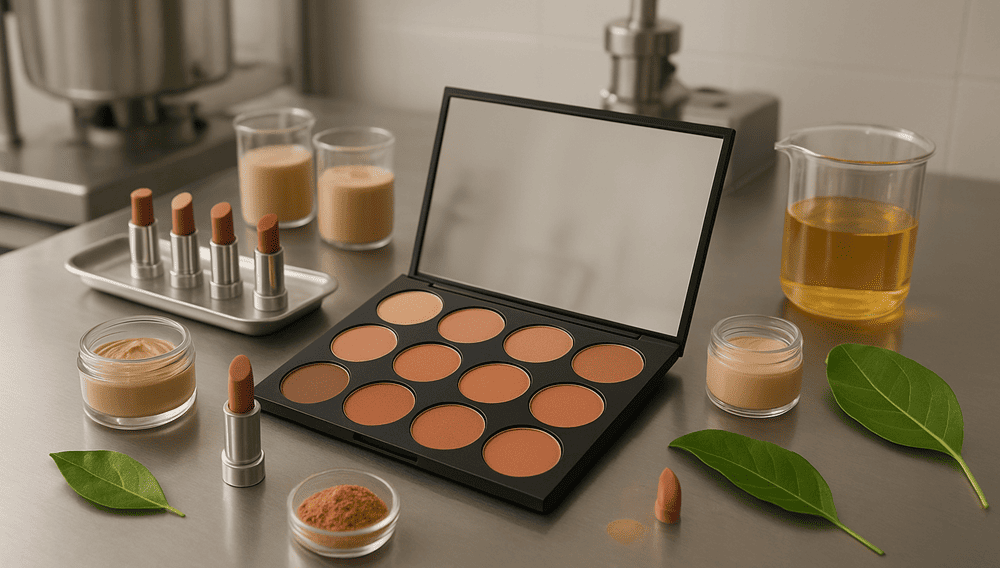
The rise of vegan color cosmetics marks a shift in what consumers expect from makeup brands. It’s no longer enough to look good, formulas must align with values: cruelty-free manufacturing, ethical cosmetics, clean ingredients, plant-based pigments and sustainable formulations are becoming standard.
For beauty business owners, understanding and adopting this shift is central to staying relevant, credible and profitable.
Why vegan color cosmetics matter now
The global color cosmetics market is large and growing: the sector is projected to grow from USD ≈ $77.73 billion in 2023 to roughly $128.11 billion by 2032. Fortune Business Insights.
Within that, the vegan cosmetics segment is also expanding rapidly — one estimate valued the vegan cosmetics market at USD $18.36 billion in 2024 and forecasts growth to about $35.5 billion by 2033 (CAGR ~7.2 %) IMARC Group.
This means brands that commit to vegan, cruelty-free and plant-based offering are not just responding to ethics — they’re tapping into a meaningful business opportunity.
What defines vegan color cosmetics?
When we talk about vegan color cosmetics, we’re referring to makeup products that:
- Contain no animal-derived ingredients (e.g., no beeswax, carmine from insects, lanolin from sheep).
- Are produced under cruelty-free manufacturing conditions (no animal testing anywhere in the supply chain).
- Use clean ingredients or minimal problem-chemicals — aligning with consumer demand for transparency.
- Employ plant-based pigments and natural compounds where possible. For example, research shows that plant-based colorants are preferred over synthetic dyes for safety and sustainability.
- Are manufactured with sustainable formulations — meaning the whole product lifecycle (formulation, packaging, disposal) is taken into account.
For a beauty brand owner, delivering on these is a way to differentiate and build long-term trust.
Key components to build into your vegan-makeup strategy
Below are the major areas to focus on if you want to succeed in this space:
1. Formulation & ingredient sourcing
- Make sure your suppliers comply with no animal-derived ingredients, and certify cruelty-free.
- Consider sourcing plant-based pigments instead of synthetic colourants. For example, the global pigment market is witnessing increasing demand for natural alternatives.
- Ensure stability, performance and colour payoff are equal (or superior) in vegan formulas — consumers expect results, not compromise.
2. Manufacturing & certification
- To highlight ethical practice, your manufacturing process should be transparent and decoded for consumers.
- Work with NK Cosmetics, a private lablel cosmetic manufacturer that can deliver cruelty-free manufacturing and understands vegan claims.
- At this stage you might link in resources and article posts about custom makeup formulations, for example: how to work with a private-label manufacturer specializing in vegan formulas.
- Ensure packaging and formulation are also in sync with sustainable formulations, this means thinking beyond ingredients to how packaging fits the story.
3. Packaging & branding
- Packaging should support your vegan/ethical message: minimal waste, recyclable components, and clear labeling.
- Brands increasingly emphasise this across the board — not just the formula. This makes intersection with eco-friendly cosmetic manufacturing tips relevant for your brand’s upstream processes.
- Your brand story must reflect authenticity: telling consumers exactly why your product is vegan, cruelty-free and clean matters.
4. Marketing, positioning and consumer trust
- Highlight your vegan credentials, but do so without sounding gimmicky. Consumers trust transparency.
- Feature your ingredient story (plant-based pigments, natural colourants), your cruelty-free commitments and your ethical cosmetics stance.
- Use consumer-facing claims backed by information: e.g. “formulated without animal-derived waxes”, “tested under ethical methods”, “packaged in recyclable aluminium”.
- Don’t forget regulatory and competitor context. For example: 64%+ of the colour cosmetics market is being driven by natural/organic variants.
How to launch a vegan colour-makeup line – checklist for brand owners
Here’s a practical list to guide your launch:
- Define your niche & value proposition
- Are you targeting vegan-only buyers or a broader audience who appreciate ethical credentials?
- Decide your initial product category (lipstick, eye palette, blush) and your brand tone.
- Are you targeting vegan-only buyers or a broader audience who appreciate ethical credentials?
- Audit your supply-chain
- Verify suppliers’ certifications for vegan and cruelty-free.
- Check pigment sourcing for plant-based options and clean-ingredient standards.
- Verify suppliers’ certifications for vegan and cruelty-free.
- Build your brand story and packaging
- Create packaging that reinforces your values without adding cost unnecessarily.
- Avoid mixed messages: If your packaging is not sustainable, your vegan claim may appear inconsistent.
- Create packaging that reinforces your values without adding cost unnecessarily.
- Formulate and test your product
- Ensure your vegan colour cosmetics deliver performance and safety.
- Conduct wear tests, allergy/sensitivity checks, stability tests.
- Ensure your vegan colour cosmetics deliver performance and safety.
- Launch with transparency and education
- Educate your audience on what “vegan” means in colour cosmetics.
- Use social proof, certifications, behind-the-scenes snapshots of manufacturing.
- Offer clear differentiation on your use of plant-based pigments and ethical sourcing.
- Educate your audience on what “vegan” means in colour cosmetics.
- Monitor metrics and iterate
- Track sales growth, repeat purchase rate, consumer feedback regarding finish/colour payoff.
- Adjust formulations or packaging as needed based on feedback and market trends.
- Track sales growth, repeat purchase rate, consumer feedback regarding finish/colour payoff.
Real-world examples & trends
- The vegan cosmetics market continues to rise: one report put it at USD $18.36 billion in 2024 and forecasts it to reach around USD $35.50 billion by 2033.
- The broader colour cosmetics market is expanding at ~4.8% CAGR (2025-2035) and natural/organic segments are leading. Future Market Insights
- Natural pigment utilisation is increasing: there’s growing academic and industrial interest in botanical-derived colourants as safe and sustainable alternatives.
These trends point to the fact that launching vegan colour cosmetics is less of a niche choice and more of a forward-looking strategy.
Challenges and how to overcome them
- Cost pressures: Vegan/clean ingredients + plant-based pigments + sustainable packaging may increase cost. Solution: identify your key differentiators, set premium pricing or streamline SKUs initially.
- Performance skepticism: Some consumers believe vegan equals lower performance. Solution: invest in testing, hero product examples, influencer/consumer reviews.
- Supply-chain constraints: Sourcing plant-based pigments and vegan formulas in volume can be harder. Solution: start with moderate MOQs, build partnerships, communicate timelines.
- Greenwashing risk: If claims are inconsistent (e.g., vegan formula but unsustainable packaging), consumer trust drops. Make sure your packaging aligns with your ingredient story and consider frameworks around sustainable formulations and ethical cosmetics fully.
Final thoughts
In the evolving beauty industry, embracing vegan color cosmetics isn’t just a moral choice, it’s a business decision.
NK Cosmetics Manufacturer Inc is offering makeup that delivers on finish and values sets the stage for growth.By committing to cruelty-free manufacturing, selecting clean ingredients, harnessing plant-based pigments, and building truly sustainable formulations, you align with consumer momentum and set your brand up for the long term.