
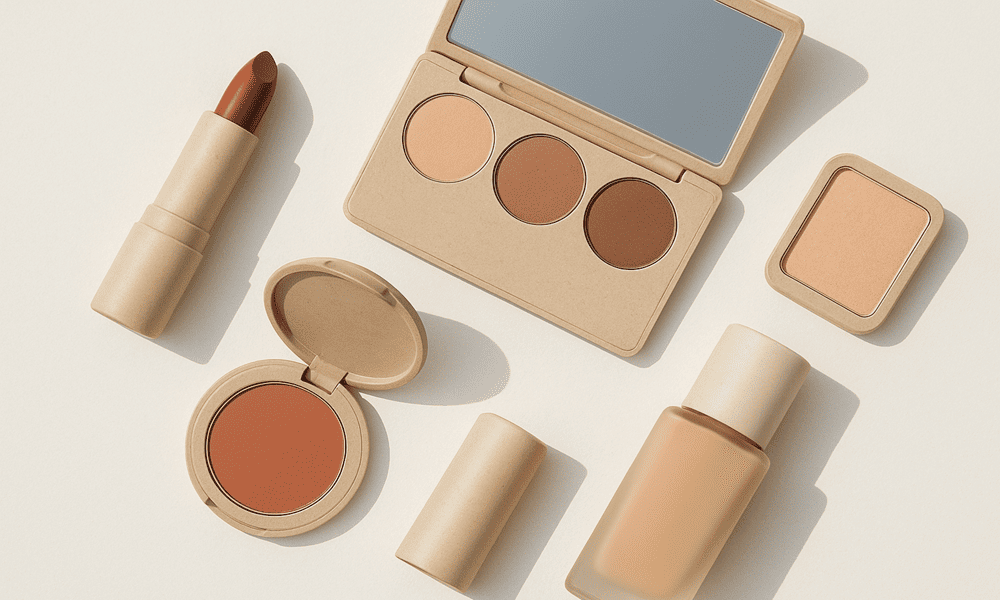
The global makeup market is evolving fast and as a beauty-business owner, staying ahead of the curve in color cosmetics trends is critical. In this post we’ll explore what is shaping the next wave of colour product innovation, formulation and consumer demand. We’ll look at key drivers such as clean beauty makeup, sustainable cosmetics, innovative makeup textures, hybrid beauty products, and makeup technology to give you actionable insight.
Why Now is a Pivotal Moment for Colour
- The global colour cosmetics market is estimated at about USD 79.06 billion in 2025 and forecast to reach approximately USD 148.19 billion by 2034, growing at a CAGR of ~7.23% between 2025-2034. Precedence Research
- Another research house reports the market at USD 86.4 billion in 2024 with an expected climb to USD 137.4 billion by 2033 (CAGR ~5.3%)
- The overall beauty market is expected to grow ~5% annually through 2030, with companies identifying consumer value scrutiny and product relevance as major themes.
These numbers underscore that brands and manufacturers who understand emerging trends in colour cosmetics can capture growth. Let’s break down the major themes.
1. Clean Beauty Makeup Is No Longer Optional
When consumers think of makeup, they increasingly expect more than just colour—they want skin-benefit, fewer irritants, transparent labels, and ethical credentials.
Key shifts:
- Formulations now often include skincare-like benefits: e.g., pigments + SPF or vitamins.
- Rising demand for vegan, cruelty-free, and botanical-derived ingredients.
- Consumers are becoming sceptical of synthetic heavy-chemicals and prefer more minimal, safe, sensorial formulas.
For beauty-business owners and manufacturers, this means you may need to partner with a coloured cosmetics manufacturer who can support clean-label variants, ingredient traceability and certification.
2. Sustainable Cosmetics: Packaging, Formulas & Ethics
Sustainability has moved from a “nice-to-have” to a business imperative in colour cosmetics. It affects everything from pigment sourcing to container design.
Key considerations:
- Use of refillable or recycled material packaging to reduce waste.
- Fewer microplastics, fewer non-biodegradable additives.
- Transparent supply chains and ethical sourcing of pigments (especially for bold colours).
- Brands are under pressure to deliver value aligned with sustainability, rather than just premium pricing. (See the global beauty market commentary: 54 % of company execs expect “consumer scrutiny of perceived value” to be a major theme.)
If you are launching a line, integrating sustainable cosmetic packaging early is a strong brand differentiator.
3. Innovative Makeup Textures & Hybrid Beauty Products
Colour cosmetics aren’t just red lipsticks and brown eyeshadows any more. The textural and format innovation happening now is substantial.
Texture & format trends:
- Cream-to-powder hybrids, gel-stick formulations, soft-focus powders.
- Sheer tints that double as skincare (foundation-with-moisturiser, lip-balm-with-pigment). This is part of the hybrid beauty products movement.
- Multi-use products (eye/cheek/lip) increasing appeal for minimal kits.
- Digital / AR technology enabling virtual try-ons contributes to texture expectation (smooth blends, adaptive finishes).
From a manufacturing standpoint, working with a private label cosmetics manufacturer who understands these formats can shorten your time-to-market.
4. The Impact of Makeup Technology
Technology is influencing how colour cosmetics are formulated, marketed, and experienced.
Tech facets:
- Shade-matching via AI or AR tools: consumers expect to “try” before they buy.
- Smart pigments: materials that adapt to light, skin tone, or environment.
- Better processing technologies that allow for high pigment load in minimal layers, or encapsulated active ingredients.
- E-commerce optimization (online-first brands) demands packaging and formula stability for shipping; another dimension of makeup technology.
As you plan your next product line, consider how innovative makeup textures will align with tech-enabled consumer experiences.
5. Key Trend Themes You Should Be Watching
Here’s a handy table summarizing major themes, how they manifest in colour cosmetics, and key questions you should ask as a brand or manufacturer.
| Trend Theme | Manifestation in Colour Cosmetics | Questions for Your Business |
| Clean Beauty Makeup | Skincare-infused bases, fewer synthetic pigments | Are your formulations free from controversial ingredients? |
| Sustainable Cosmetics | Refillable compacts, recycled packaging, ethical pigment sourcing | How can your packaging reduce waste or enhance brand ethics? |
| Innovative Makeup Textures | Gel-sticks, cream-powders, multi-use sticks | Does your line include formats that address convenience + texture expectations? |
| Hybrid Beauty Products | One product for eyes, lips & cheeks; makeup + skincare hybrids | Are you making “just makeup” or “makeup plus benefit”? |
| Makeup Technology | Virtual try-on, AI shade matching, smart pigments | How will your product perform both online and offline? |
6. Strategic Takeaways for Your Colour Line in 2025
- Position for performance + purpose: It’s not enough for a lip colour to look good—it needs to align with ethical values, sustainability, and sensory expectation.
- Build for format diversity: Consider unique textures, hybrid models, and multi-use kits to meet consumer demand for simplicity and innovation.
- Leverage tech and experience: If you’re launching globally, plan for digital tools (virtual try-on, accurate shade capture) and robust supply chain (especially if opting for sustainable materials).
- When choosing manufacturing partners, the right one will guide you in formulation, regulatory compliance and market readiness. For example, cooperating with an experienced eco-friendly cosmetic manufacturing tips partner is invaluable if you’re delivering on sustainability claims.
- Be ready to scale globally: Given the projected global growth (see market sizing above), your colour cosmetics line should have global appeal (diverse shades, inclusive undertones, multi-region shipping infrastructure).
- Stay agile: Texture and finish preferences shift quickly (e.g., the return of bold eye makeup or neon lashes in 2025) as reported in trend-watching articles.
7. How to Translate Trends into Your Product Development Roadmap
Here’s a suggested step-by-step roadmap for a beauty brand or manufacturer looking to bring a colour cosmetics collection aligned with 2025 trends:
- Market scan & shade work
- Study regional undertone demands, online behaviour, and color-preference data.
- Develop pigment libraries with sustainability credentials and adaptable textures.
- Study regional undertone demands, online behaviour, and color-preference data.
- Formulation phase
- Select clean/hybrid formulas (e.g., makeup + skincare benefit).
- Prioritize texture innovation (convertible finishes, multi-use sticks).
- Ensure compatibility with sustainable cosmetic packaging options.
- Select clean/hybrid formulas (e.g., makeup + skincare benefit).
- Packaging & supply chain
- Choose recyclable/refillable systems, lightweight shipping formats.
- Confirm ethical sourcing of pigments and raw materials.
- Review manufacturing partner’s capacity for fragrance-free skincare production if intersection of skincare and colour is relevant.
- Choose recyclable/refillable systems, lightweight shipping formats.
- Tech & digital readiness
- Embed digital shade-match tools or virtual try-on experiences.
- Align e-commerce logistics and global shipping readiness.
- Build social content around finishing textures and the “why” behind your sustainable/clean positioning.
- Embed digital shade-match tools or virtual try-on experiences.
- Launch & marketing
- Lead with key textures or hybrid pieces (e.g., tinted balm, gel-cheek/lip stick).
- Feature sustainability credentials, tech-enabled experiences, inclusive shade ranges.
- Use influencer/regional ambassadors to showcase trending formats (bold eye, neon lashes, etc).
- Lead with key textures or hybrid pieces (e.g., tinted balm, gel-cheek/lip stick).
- Feedback & iteration
- Monitor consumer usage, return data, social sentiment.
- Use this to refine texture, shade mapping, and expand into adjacent products (e.g., nails, brow make-up, colour correctors).
- Monitor consumer usage, return data, social sentiment.
Final Thoughts
The color cosmetics trends shaping 2025 are about more than colour. They reflect consumer hunger for meaning, performance, sustainability and innovation. As a brand or manufacturer you’ll succeed by navigating across all thesevectors—formulation, texture, packaging, tech and global scale.
Make sure that your manufacturing partner supports your vision for clean beauty makeup, sustainable cosmetics, hybrid beauty products and the tech-enabled experience your consumers expect. In doing so, you’ll be well positioned to capture market growth and deliver products that resonate.
Let’s make your next colour collection not just look good, but work hard for your brand’s future.