
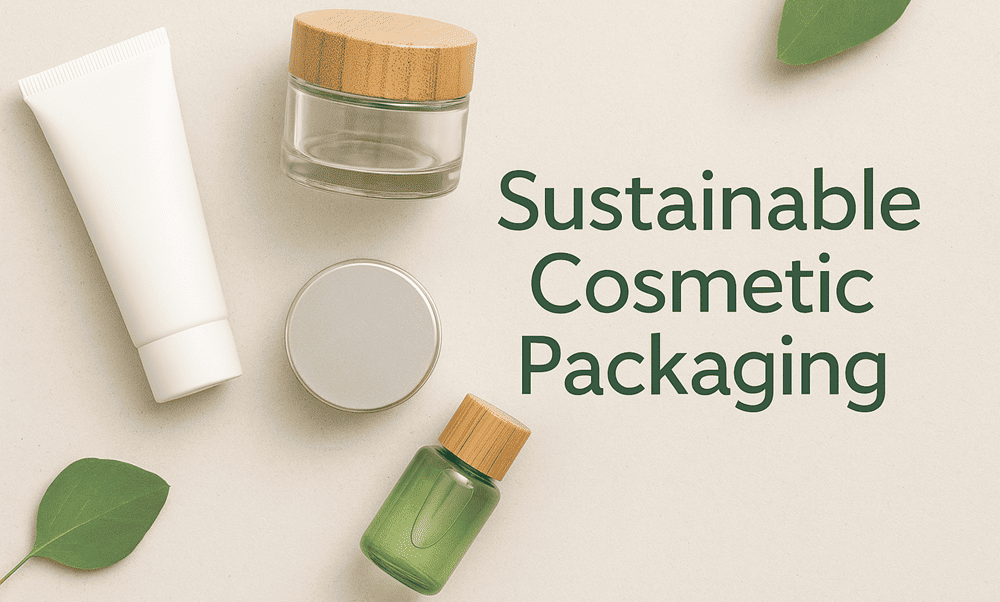
In today’s rapidly evolving beauty marketplace, making packaging decisions is no longer just about aesthetics or cost. The shift toward sustainable cosmetic packaging is becoming a defining factor in brand success, consumer preference and regulatory compliance. For beauty business owners, understanding how to adopt eco-friendly packaging, work with cosmetic jars wholesale, and offer green cosmetic packaging or recyclable skincare packaging is essential to staying ahead of sustainable beauty trends.
Why sustainable cosmetic packaging matters more than ever
The beauty-packaging sector is growing, but so are the environmental concerns and consumer expectations. According to industry data, the global cosmetic packaging market is projected to grow from about US$57.55 billion in 2025 to nearly US$80 billion by 2032, with a CAGR of roughly 4.8%. Fortune Business Insights
At the same time, refillable and truly recyclable formats are increasingly demanded: the global refillable packaging market, for example, is forecast at US$47.49 billion in 2025 and growing.
Meanwhile, a survey of American consumers found that 54% of respondents reported deliberately choosing products with sustainable packaging within the past six months — and 90% said they are more likely to buy from a brand whose packaging is eco-friendly.
For beauty brands and manufacturers, this is clear: incorporating sustainable packaging is no longer optional—it’s becoming a market expectation.
Core elements of sustainable cosmetic packaging
Here are the key attributes and considerations when selecting or designing packaging that qualifies as “sustainable” for beauty brands:
1. Material choices
- Shift away from single-use conventional plastics toward glass, aluminum, bamboo, molded fibre, or post-consumer-recycled (PCR) content plastics.
- Choose packaging materials that are actually widely recycled or reusable in your target market. US consumer research shows that brand owners should be the primary party responsible for packaging sustainability.
- Mono-material design (i.e., fewer layers, simpler composites) improves recyclability.
2. End-of-life strategy
- Use designs that enable reuse, refill or easy recycling. For example: refill systems, removable components, minimal mixed materials.
- Consider the infrastructure in your markets: just because a package is “recyclable” doesn’t mean it will actually be collected.
- Monitor emerging regulatory frameworks: e.g., extended producer responsibility (EPR) laws are being introduced which require producers to take more accountability for packaging waste.
3. Supply-chain and sourcing
- Ensure the materials you choose are traceable, and have lower embodied environmental impact.
- Collaborate with your contract manufacturers or private-label partners to account for packaging strategy: whether that’s through a clean beauty private label partner, or working with Canadian cosmetic labs (if you source/produce in Canada) who have strong sustainable packaging options.
4. Design and function
- Packaging must still meet the brand’s luxury or mass-market aesthetic but also perform: protect product, preserve stability, maintain user experience.
- Minimalist design, reduced material volumes, and SMART packaging (e.g., QR codes showing recyclability) are emerging trends.
- For business-to-business buyers (beauty brands buying packaging or contract manufacturing) the balance between cost, brand experience and sustainability is critical.
Key trends shaping sustainable packaging in beauty
Here are some of the top sustainable beauty trends you should be aware of if you’re running or advising a beauty brand:
- Refillable packaging models: Many brands are introducing modular packaging where the consumer retains the primary container and buys refill cartridges. This reduces waste and builds brand loyalty.
- Biodegradable and compostable alternatives: Materials like bamboo, molded fibre, and plant-based plastics are gaining traction in beauty packaging.
- Circular economy thinking: Packaging designed from the start for recovery, reuse, or recycling. More brands are embracing this—nearly 80% of beauty brands reportedly plan to prioritise sustainable packaging, ingredients and sourcing.
- Transparency and consumer communication: Consumers increasingly expect clarity about packaging materials, recyclability, refill systems, and overall environmental credentials. Surveys show a majority want clear sustainability labels.
- Wholesale options with sustainability built-in: For brands looking to buy cosmetic jars wholesale, it’s increasingly feasible to source jars made with PCR content or recyclable aluminium/glass at scale.
Practical steps for beauty brands to adopt sustainable cosmetic packaging
As a beauty business owner (or someone advising them), here’s a practical roadmap to implement sustainable packaging:
- Audit your current packaging
- List all packaging SKUs by material, weight, recyclability, end-use.
- Identify materials that are single-use, complex, or not easily recyclable.
- List all packaging SKUs by material, weight, recyclability, end-use.
- Define your sustainability goals
- E.g., “All packaging to be reusable or recyclable by 2028”, “50% PCR content by 2026”.
- Align these with your brand promise and market positioning.
- E.g., “All packaging to be reusable or recyclable by 2028”, “50% PCR content by 2026”.
- Source sustainable options for packaging
- When buying cosmetic jars wholesale, specify materials like glass, aluminium, or PCR-plastic.
- Engage packaging suppliers that can certify their recyclability or reuse credentials.
- When buying cosmetic jars wholesale, specify materials like glass, aluminium, or PCR-plastic.
- Work with production/contract partners
- Whether you’re working with a clean beauty private label manufacturer or a natural skincare private label provider, ensure packaging sustainability is embedded early.
- If working with Canadian cosmetic labs or other regional specialists, ask about their sustainable packaging capabilities.
- Whether you’re working with a clean beauty private label manufacturer or a natural skincare private label provider, ensure packaging sustainability is embedded early.
- Design for recycling/refill from Day One
- Consider container systems where consumers return or refill rather than discard.
- Simplify materials (mono-materials over multi-layer composites).
- Ensure graphics and labelling clearly communicate recyclability or refill options for the consumer.
- Consider container systems where consumers return or refill rather than discard.
- Educate your consumer and marketplace
- Use your blog, packaging, social media to explain your packaging choices.
- Highlight your green cosmetic packaging strategy: e.g., “Our jar is 100% recycled aluminium and fully recyclable.”
- Use milestone communications: “By 2026 our lineup will use 80% recyclable skincare packaging.”
- Use your blog, packaging, social media to explain your packaging choices.
- Measure, iterate, and report
- Track metrics: % of packaging weight that is recyclable, % of PCR content, consumer uptake of refill programmes.
- Publish progress: transparency breeds trust.
- Iterate: materials, suppliers and consumer behaviour will change — stay agile.
- Track metrics: % of packaging weight that is recyclable, % of PCR content, consumer uptake of refill programmes.
Why packaging matters for competitive advantage
- Brand differentiation: In a crowded beauty market, offering standout sustainable packaging gives brands a genuine point of difference.
- Consumer loyalty & willingness to pay: As we saw, 90% of consumers say they’re more likely to buy from a brand with sustainable packaging. Willingness to pay more for such packaging is also documented.
- Regulatory readiness: With EPR laws and stricter definitions of “recyclable” emerging (see the Sustainable Packaging Coalition report) Sustainable Packaging Coalition, your packaging strategy can become a risk-mitigation factor.
- Cost and waste savings: By reducing material, weight, and enabling refill systems, brands can lower long-term cost and environmental impact.
- Supply-chain resilience: Materials that are more readily recycled, better tracked, and designed for reuse help reduce dependency on virgin plastics and volatile materials.
FAQs for beauty brands adopting sustainable packaging
Q 1: Is “green cosmetic packaging” just marketing hype?
No—while some claims are superficial, there are measurable performance standards and certifications. The key is verifying recyclability, reuse capability and actual consumer take-up, not just using buzzwords.
Q 2: How many “cosmetic jars wholesale” options exist for sustainable materials?
More than ever. Many packaging suppliers now offer jars in glass, aluminium or PCR-plastic, with larger minimums for wholesale orders. Always check material certification and end-of-life options.
Q 3: Is “eco-friendly packaging” more expensive?
Initially yes, but cost curves are converging. More importantly, the long-term benefits (brand perception, loyalty, regulatory readiness) often outweigh the incremental cost.
Q 4: What counts as “recyclable skincare packaging”?
Packaging that can be collected, sorted and processed into a new product stream with reasonable certainty. Materials like glass and aluminium typically meet this, complex multi-layer plastics may not.
Q 5: Should I also worry about “sustainable beauty trends”?
Absolutely. Packaging is one pillar, but broader trends around ingredient transparency, clean formulations, refill systems and brand ethics all intersect. Look at this holistically for your brand.
Case snapshot: what leading brands are doing
- Some brands are shifting to refill systems where the consumer buys a single container once, then buys refill cartridges, drastically reducing waste.
- Use of moulded fibre or bamboo in place of plastic tubs is gaining traction.
- Packaging suppliers are offering “eco-forward” lines that prioritise recyclability and low-impact materials.
These examples show that for a brand like NK Cosmetics, integrating sustainable cosmetic packaging is not hypothetical—it is already happening.
Final thoughts
For beauty business owners, the move toward sustainable packaging is not just ethical—it’s strategic. By focusing on eco-friendly packaging, sourcing cosmetic jars wholesale in recyclable materials, and leaning into green cosmetic packaging and recyclable skincare packaging, brands align with evolving consumer values and regulatory pressures.
If you align your strategy today: audit packaging, set clear goals, design for reuse/recycling, communicate with transparency, and measure progress — you position your brand not just for the next trend, but for the future of beauty.
Remember: packaging tells your brand story just as loudly as what goes inside the jar. Make sure yours speaks of sustainability, credibility and authenticity.