
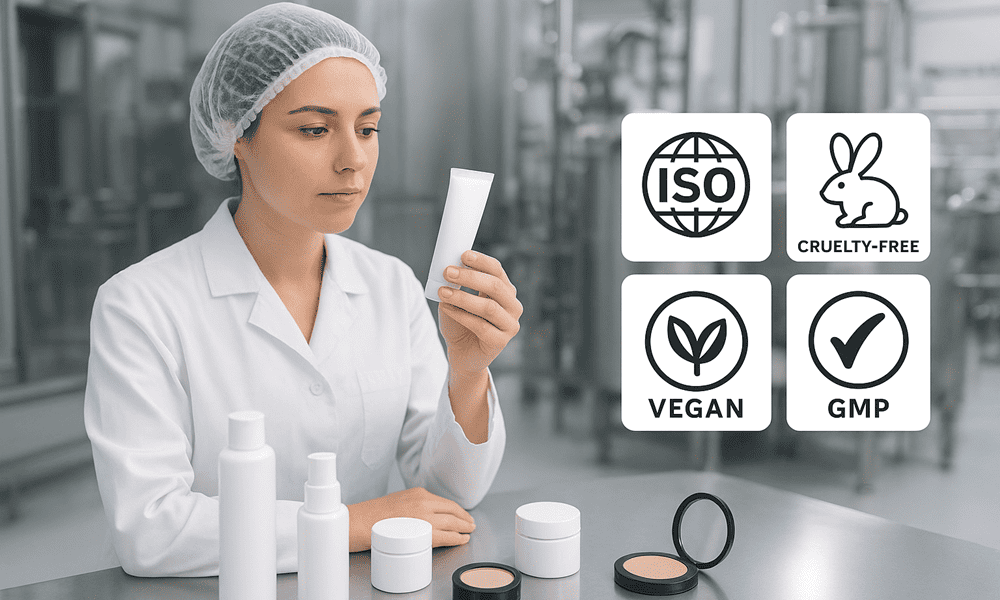
The beauty market has changed quickly over the past few years. Customers now want information that reassures them about how a product is made, what goes inside it, and whether the brand follows reliable manufacturing practices. This shift has made beauty product certifications an essential part of product development, especially for brands that plan to scale through retail, marketplaces, and international markets.
For founders evaluating formulas, packaging, and long-term growth, certifications offer a way to demonstrate trust without saying a word. They also help tie in larger decisions such as choosing a cosmetic manufacturer, because not every partner can support the paperwork and compliance processes needed for certification.
Certifications bring structure to a brand’s claims. When a business states that a product is organic, cruelty-free, vegan, or made with quality systems, the certification acts as a proof point. This is why buyers, retailers, and distributors rely on certifications to evaluate new labels.
With interest in transparency and regulated processes rising, brands that invest in certifications often come across as more reliable compared to those that don’t. Many companies that compete in clean or conscious beauty categories also highlight their work around sustainable beauty packaging, which connects directly to how certified products are presented and communicated.
Why Certifications Matter More Than Ever
Growing expectations around safety and ethics have changed what customers consider “trustworthy.” A recent McKinsey report noted that more than half of Gen Z shoppers avoid brands that lack clear information about their sourcing and testing methods. Certifications fill that gap by giving a structured and verified view of how a product is made. The reassurance is especially important for categories like skincare and hair care where customers expect consistent performance. This also supports conversations around private label cosmetic manufacturer partnerships since manufacturers already following certified systems can reduce risk for new brands.
Beyond consumer trust, certifications affect business operations. Many retailers require proof of compliance before listing a product. Exporting also becomes easier when a brand holds certifications like ISO 22716 or GMP because regulatory bodies recognize these standards. Overall, certifications help reduce approval delays, create better documentation, and support stronger compliance systems—benefits that continue to matter as brands scale.
Understanding the Most Common Beauty Certifications
Beauty certifications fall into several groups. Each one serves a different purpose, so brands often combine multiple certifications depending on their product line and market goals.
ISO Standards and Quality Systems
ISO standards guide businesses in maintaining consistent operations. In the beauty sector, ISO 22716 is the most relevant. It outlines guidelines related to production, storage, documentation, and handling of cosmetic products. ISO 9001 focuses on broader quality management, helping companies set up systems that prevent errors, improve workflow, and support long-term growth. For companies that highlight environmental responsibility, ISO 14001 helps demonstrate a structured approach to reducing waste and environmental impact—an effort that aligns with brands exploring eco-friendly cosmetic manufacturing.
Although ISO certifications focus on processes rather than formulas, they create a strong foundation for regulatory compliance. Retailers appreciate the reliability that comes with ISO-driven operations, especially when onboarding new brands.
GMP Certification and Its Role in Beauty Manufacturing
GMP (Good Manufacturing Practices) is one of the most recognized certifications in the beauty industry. It verifies that a facility follows practices that ensure safe, consistent, and traceable products. GMP covers everything from sanitation to equipment validation, documentation, and staff training. These guidelines help reduce risks during production and limit issues that may appear in batches.
Many manufacturers work to maintain high GMP standards even without certification, but third-party verification builds confidence. Founders focused on long-term clean beauty positioning or topics like clean beauty manufacturing often see GMP as a baseline requirement because it supports product quality and consumer safety.
Here is where a manufacturer becomes especially important. A facility that already operates under certified systems can help brands launch faster because they maintain the paperwork, ingredient documentation, and compliance systems needed for certification applications.
Ethical Certifications: Cruelty-Free, Vegan, and Ethical Claims
Ethical claims influence buying decisions significantly, especially among young customers. Cruelty-free certifications such as Leaping Bunny and PETA’s program assure customers that the brand does not test on animals. Vegan certifications, like those from Vegan Society or Vegan Action, ensure that no animal-derived ingredients are used at any stage of production. These certifications matter most in categories like lipsticks, eyeshadows, and complexion products where pigments or waxes may contain animal-based components. This is especially relevant for brands expanding into vegan color cosmetics, where ingredient lists require careful selection and verification.
Cruelty-free and vegan certifications are often misunderstood as the same, but they cover different things. A product can be cruelty-free yet still not be vegan, and explaining this clearly on labels and websites helps maintain transparent communication with customers.
Organic and Natural Beauty Certifications
Interest in organic beauty continues to grow as customers seek products made with minimal synthetic inputs. Certifications like USDA Organic, COSMOS Organic, and Ecocert Organic help verify that both ingredients and processes meet organic guidelines. Organic standards require traceability from farm to final product, which means detailed paperwork at every step.
Brands moving into natural or plant-based formulations also use these certifications to stand out among competitors. For many beauty entrepreneurs, certification helps clarify where the product stands compared to “natural” products that are not regulated. These details help shape marketing claims while maintaining compliance with global regulations.
How Certifications Influence Labeling and Claims
Labeling is a significant part of beauty regulations. Certifications often come with rules on how logos, statements, and ingredient details must be displayed. These labeling guidelines help customers understand what the certification covers and prevent misleading claims.
Certification-aligned labeling usually includes:
- Clear ingredient lists
- Batch numbers
- Allergen details
- Country of origin
- Shelf-life symbols
These elements work together to build trust and transparency. Brands focused on sustainability also tie this into their packaging choices, often reflecting topics like sustainable beauty packaging to strengthen their overall message.
Where Bullet Points Make Sense: Key Benefits of Certification
Here are the main advantages that certifications offer beauty entrepreneurs:
- Better trust and credibility with customers
- Smoother onboarding with retail partners
- Easier compliance with global regulations
- Improved documentation and accountability
- Stronger support for brand storytelling
This section is intentionally kept as one of only a few bullet lists to maintain clean readability.
How Manufacturers Support the Certification Process
While certifications belong to the brand, much of the work happens inside the manufacturer’s facility. A manufacturing partner already certified in ISO 22716 or GMP can handle ingredient paperwork, facility audits, raw material traceability, and batch records. This support significantly shortens the timeline for certification. For brands entering clean, organic, or ethically conscious markets, this back-end support is crucial—especially when exploring topics tied to eco-friendly cosmetic manufacturing.
founders also benefit from manufacturers who understand international compliance frameworks. Whether you’re preparing for US, EU, Middle East, or Southeast Asia markets, certification-ready documentation helps avoid delays.
Checklist for Brands Preparing for Certification
Below is a simplified checklist to help founders assess readiness before applying:
- Confirm formula stability and ingredient documentation
- Ensure manufacturer supports the needed certification
- Review packaging and labeling for claim accuracy
- Maintain updated SOPs and batch records
- Review safety reports and testing documents
This will serve as the second and final bullet-point-style section in the article.
Final Thoughts
Certifications have become far more than optional add-ons—they shape how customers trust your brand, how retailers evaluate your products, and how your business prepares for long-term growth. Whether you’re planning to launch organic skincare, expand into vegan makeup, or strengthen positioning as a conscious beauty label, certifications help clarify your values through verified standards.
As the beauty sector becomes more regulated, the brands that stay prepared with proper documentation, strong manufacturing partners, and clear labeling systems will always have an advantage. And with topics like vegan color cosmetics, clean beauty manufacturing, and ethical production gaining momentum each year, certifications create the foundation for transparent communication and responsible growth.