
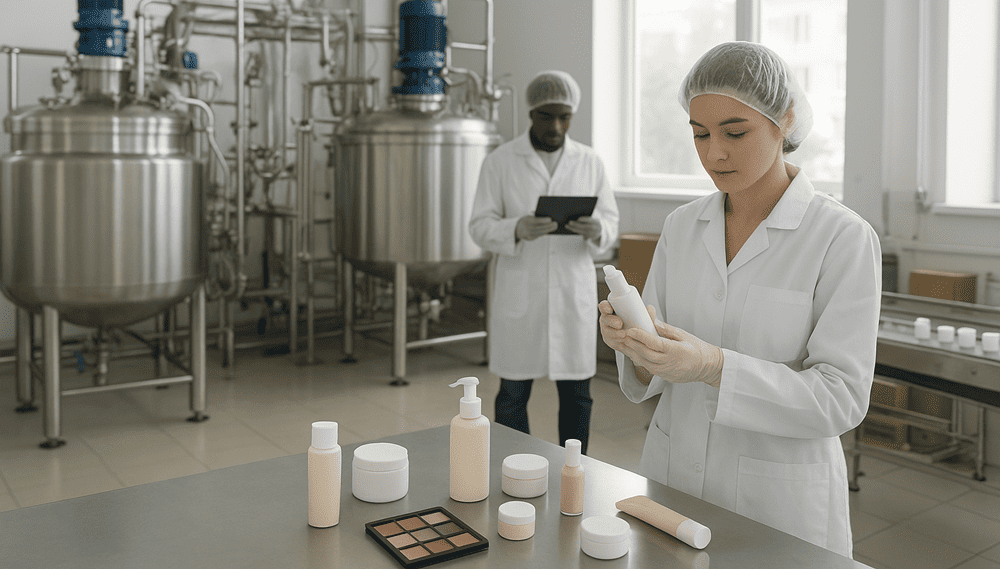
If you’re a beauty business owner in Canada, deciding which partner will produce your line is one of the most important steps. To choose a cosmetic manufacturer wisely means balancing cost, quality, certification, and trust. Here are insights, guidelines, and examples to help you make an informed decision.
Why This Decision Matters
- The Canadian cosmetics industry for beauty and personal care was worth about CAD $10.7 billion in 2023. Made in CA
- Consumers are growing more demanding: natural, cruelty-free, certified ingredients, safe packaging, strong quality control. If your manufacturer fails in standards, it can harm your brand reputation.
- With online sales increasing, the visibility of product issues is immediate. A bad batch or non-compliance spreads fast.
Key Factors to Evaluate Beauty Manufacturers Canada
When you’re evaluating beauty manufacturers in Canada, here are the main criteria:
| Aspect | What to Look For | Why It’s Important |
| Certification & Compliance | Health Canada cosmetic regulations, ISO-22716 GMP, labeling laws, ingredient hotlists. | Ensures safety, avoids recalls or legal issues. |
| Quality Control Cosmetics | Lab testing (microbial, stability, pH, heavy metals), in-line inspections, audit records. | You need consistent safe quality to build trust. |
| Manufacturing Capabilities | Range of products (skincare, makeup, hair care), R&D support, capacity, minimum order quantities, ability to scale. | Ensures your ideas can be turned into real products with your desired specs. |
| Contract Lab Selection | Expertise of lab team, experience with your type of product, transparency in cost, turnaround times. | Labs set the pace and technical integrity of formulation. |
| Cost, Lead Times, Flexibility | Price per unit, tooling costs, flexibility with formula changes, speed of delivery. | You need to plan finances, production schedule, marketing launch. |
| Reputation & References | Past clients, product performance, safety history, audit reports. | Real performance beats promises. |
Understanding Cosmetic Certification Standards
Certification is more than a checkbox. It sets expectations for every step.
- Health Canada’s Regulations: Manufacturers must follow sanitary conditions, restrict banned or harmful ingredients, comply with labeling rules (including INCI names, bilingual labels if sold nationwide).
- GMP / ISO 22716: These standards ensure good manufacturing practices in production, storage, hygiene, equipment maintenance.
- Ingredient Hotlists & Safety Testing: Health Canada maintains a Cosmetic Ingredient Hotlist of restricted or prohibited substances. Testing for microbial / chemical safety helps ensure consumer safety.
Steps to Pick the Right Manufacturer
Here’s a step-by-step process you can follow:
- Define your product scope & specs
What products do you want—skincare, colored cosmetics, hair care, etc? Are you doing natural/organic/clean formulas? Define packaging types and volumes. This helps narrow down manufacturers who already have the manufacturing capabilities you need. - List potential manufacturers
Make a shortlist of companies in different provinces (Ontario, Quebec, B.C. etc.). Check what they offer in terms of process, client base, portfolio. - Check regulatory & certification credentials
Ask for proof of GMP/ISO accreditation. Check whether they follow Health Canada rules. See documentation of QC processes. Do they maintain updated ingredient safety checks? - Review previous work / audit their quality control cosmetics
Request samples or case studies. Check stability, color, performance. Ask whether they have had recalls or regulatory reports. - Evaluate contract lab selection aspects
If you need custom formulations or specialized ingredients, ensure their lab has experienced formulators. Ask about their R&D support. Do they accept small trials? How are costs broken down? - Assess cost vs value
Don’t just pick the cheapest. Evaluate total cost (formulation, packaging, shipping, regulatory compliance) vs what you get in safety, speed, flexibility. - Visit facility if possible
Seeing the factory gives a lot: cleanliness, organization, staffing, capacity, safety practices. - Negotiate agreements clearly
Contracts should cover IP, liability, containment of defective batches, timelines, penalties.
Including Your Business Model
How you plan to sell and scale affects what you look for.
- If you want private label cosmetics manufacturing, find a manufacturer who already offers white-label or turnkey services to reduce your development burden.
- If you aim to launch unique shades or formulations, pick one strong in colored cosmetics so they have pigment labs, color matching, color stability testing.
- For more bespoke or niche formulas, consider working with a partner who can handle custom makeup formulations and guide you through lab prototyping.
- If sustainability or green credentials are part of your brand, see whether the manufacturer also does eco-friendly cosmetic manufacturing in terms of packaging, ingredient sourcing, waste, energy.
Common Trade-Offs & How to Handle Them
No manufacturer is perfect. You will need to manage trade-offs:
| Trade-Off | Potential Downside | How to Mitigate |
| Lower price vs quality | Poor stability, color fade, safety issues | Do rigorous QC, test small batches, build buffer into scheduling. |
| Fast turnaround vs custom work | Standard formulas might be reused, less uniqueness | Negotiate exclusivity, or specify custom formulations early. |
| Small minimum orders vs higher costs | Higher per-unit cost when scale is low | Start with small launches, then scale; consider co-packing or sharing production runs. |
Canadian Market Examples & Insights
- Canadian consumers show strong preference for eco-friendly packaging: according to industry reports, over 86 % say they would pay more for products with sustainable packaging.
- Lip and eye makeup are big growing categories: projected revenues for lip makeup reach hundreds of millions by 2027. Brands specializing in colored cosmetics need good pigment stability and color consistency.
- The number of beauty suppliers, manufacturers and stores is growing especially in Ontario and Quebec, making vendor options more competitive.
Checklist: Questions to Ask Before Signing Up
Here are direct questions to ask potential manufacturers:
- Are you compliant with Health Canada cosmetic regulations and good manufacturing practices like ISO 22716?
- Can you provide recent audit reports and QC data?
- What is your manufacturing capabilities for the specific line I want (skincare, colored cosmetics, hair care etc.)?
- What are your min order quantities, lead times?
- Do you support contract lab selection / R&D to adapt new formulas?
- What are your policies regarding defective batches / product recalls / liability?
- How do you handle packaging, labeling, bilingual requirements (English/French)?
- What quality control measures do you use (stability, microbial, heavy metals)?
Summary
To choose a cosmetic manufacturer in Canada well means doing more than picking a facility. It’s about ensuring standards, matching product type, having lab & formulation support, transparent QC process, good cost structure, and strong compliance.
If you align with a partner that offers reliable quality control cosmetics, covers your needs in manufacturing capabilities, assists with R&D and contract lab selection, you’ll feel confident launching products that stand out. Whether you go for private label cosmetics manufacturing, custom makeup formulations, or a line with lots of colored cosmetics, your decisions early on shape your brand’s success.